The Plot to Change America: How Identity Politics Is Dividing the Land of the Free by Mike Gonzalez
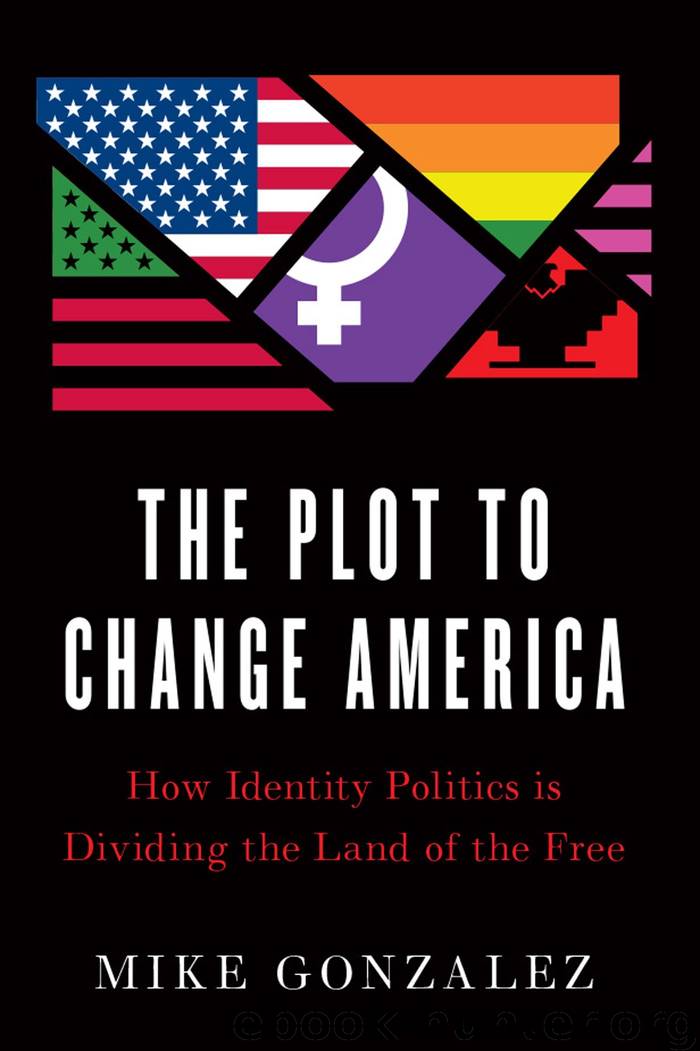
Author:Mike Gonzalez
Language: eng
Format: epub
Publisher: Encounter Books
Published: 2020-08-08T16:00:00+00:00
CHAPTER 6
The Demographic Hustle
Ruy Teixeira has made quite a career out of predicting that increasing diversity in America would give the Democratic Party a ruling majority in the early twenty-first century. This would enable the party to impose its policy agenda on the country even when Republican presidents occasionally won elections. As Teixeira and his coauthor, John Judis, explain in their 2002 book on political demography, The Emerging Democratic Majority, American politics goes in cycles “where one party and its politicians have predominated for a decade or more—winning most of the important elections, and setting the agenda for public policy and debate…. During these periods of ascendancy, the dominant party hasn’t necessarily gotten everything it has wanted, but it has set the terms of which compromises have occurred.”1 Teixeira and Judis met in the early 1970s when they were both members of a socialist group, the New American Movement (NAM), and have remained friends since. “Hispanic support is a crucial part of a new Democratic majority,” they write, adding similar comments about Asian Americans. They admit in passing that, “like the term Hispanic, the term Asian-American imputes a spurious unity of belief to a diverse group of nationalities,”2 but that did not prevent their rosy forecast for a new Democratic majority.
While Judis has remained a socialist, Teixeira says now that he has gravitated toward democratic-socialist beliefs. He is, at the time of this writing, a senior fellow at the Center for American Progress (CAP), the intellectual hothouse of the left wing of American liberalism. In 2017 he gave an indication of the kind of leftist program he thinks will dominate in America in this century. “I favor what economists are calling a model of equitable growth,” he said in an interview with Judis for the left-wing website Talking Points Memo. “It would mean substantial government investment in creating new opportunities for the middle and aspirational classes. It could include a dramatic expansion of the educational system and a Manhattan-style investment in bringing down the price of clean energy and building the infrastructure to match.” He admits that such “proposals would not get through Congress now, but it is the kind of agenda that I am optimistic that the Democrats will endorse and that the country will eventually embrace.”3 The Democratic Socialists of America (which, it is important to note, were created by the NAM in 1983) are ascendant, with political stars like Bernie Sanders and Alexandria Ocasio-Cortez, because today’s challenges “are simply too big to be solved by mild, ameliorative steps,”4 Teixeira wrote for the British news website UnHerd in 2018.
So how have Teixeira’s 2002 predictions held up so far? George W. Bush won reelection in 2004; during the Obama administration, the Republicans retook the House in 2010 and kept it for eight years and retook the Senate in 2014; under Obama, the Democrats lost around a thousand seats at the national, state, and local levels; Donald Trump beat Hillary Clinton in 2016; and there is a clear populist wave in the United States and throughout the West.
Download
This site does not store any files on its server. We only index and link to content provided by other sites. Please contact the content providers to delete copyright contents if any and email us, we'll remove relevant links or contents immediately.
| Anthropology | Archaeology |
| Philosophy | Politics & Government |
| Social Sciences | Sociology |
| Women's Studies |
The Secret History by Donna Tartt(19466)
The Social Justice Warrior Handbook by Lisa De Pasquale(12291)
Thirteen Reasons Why by Jay Asher(9111)
This Is How You Lose Her by Junot Diaz(7054)
Weapons of Math Destruction by Cathy O'Neil(6465)
Zero to One by Peter Thiel(5945)
Beartown by Fredrik Backman(5930)
The Myth of the Strong Leader by Archie Brown(5623)
The Fire Next Time by James Baldwin(5579)
How Democracies Die by Steven Levitsky & Daniel Ziblatt(5321)
Promise Me, Dad by Joe Biden(5228)
Stone's Rules by Roger Stone(5185)
A Higher Loyalty: Truth, Lies, and Leadership by James Comey(5082)
100 Deadly Skills by Clint Emerson(5023)
Rise and Kill First by Ronen Bergman(4890)
Secrecy World by Jake Bernstein(4872)
The David Icke Guide to the Global Conspiracy (and how to end it) by David Icke(4843)
The Doomsday Machine by Daniel Ellsberg(4618)
The Farm by Tom Rob Smith(4607)
